Students often return from international study programs with photographs, souvenirs and memories. According to Professor Kyoung-sun Min, the most valuable outcome of international learning is something much harder to capture: a broader perspective on the world and their place within it.
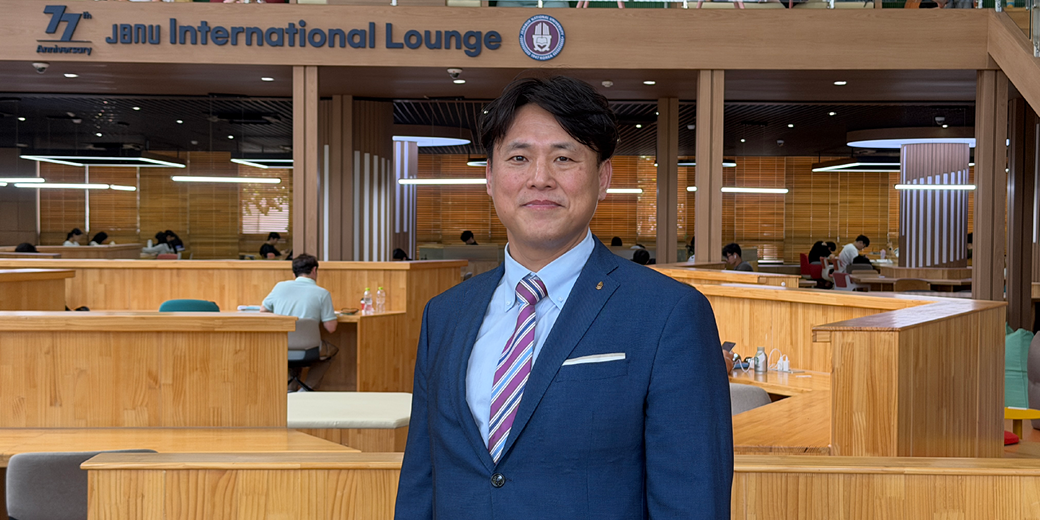
As a Professor in the Department of Public Administration & Policy at Jeonbuk National University (JBNU), Kyoung-sun Min helps students understand how governments respond to complex social challenges. Earlier this year, he accompanied the first cohort of JBNU students to Sydney to participate in the College of Law's Problem-Based Learning (PBL) Training Program.
What stood out most was the change he saw in the students themselves.
"The most memorable outcome was the transformation in our students' attitudes," says Professor Min.
"Before joining the program, many of them viewed English primarily as an academic subject that they needed to study. However, after spending a week in Sydney, they came to appreciate that English is an essential tool for communicating and collaborating in an international environment."
As the College prepares to welcome a second cohort this August, Professor Min reflects on the Australia-Korea partnership behind the program and why international education matters for students preparing to work across borders.
Building an Australia-Korea Partnership in International Education
The relationship between JBNU and the College of Law began in November 2024, when Professor Min met James Jung, Executive Director of International Strategy at the College of Law, during a seminar in Jeju, South Korea.
That meeting sparked discussions about collaboration between the two institutions. In January 2025, JBNU academics travelled to Australia for a joint seminar hosted by the College of Law, resulting in a Memorandum of Understanding between JBNU's Department of Public Administration and the College.
The partnership continued to grow throughout 2025.
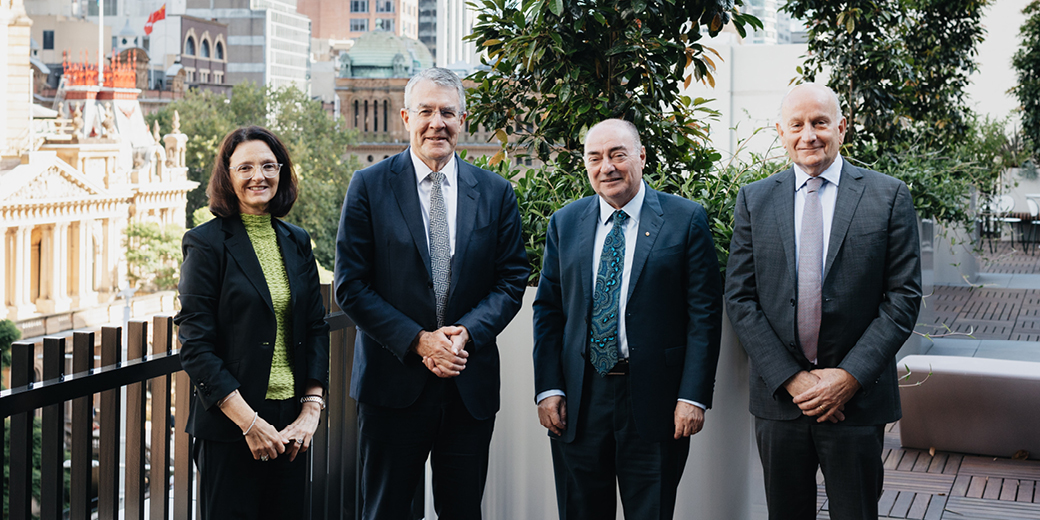
"College of Law Group Chairman, Joseph Catanzariti AM, and his delegation visited JBNU in June 2025. During the visit, the collaboration was further strengthened through the signing of an additional Memorandum of Understanding between the College of Law and JBNU's College of Social Sciences."
For Professor Min, however, the success of the partnership is measured by student outcomes rather than formal agreements.
"Since then, our partnership has evolved well beyond formal agreements. In January 2026, the first cohort of JBNU students travelled to Sydney to participate in the newly developed Problem-Based Learning Training Program, which proved to be an exceptionally valuable educational experience."
Why International Learning Goes Beyond Language Skills
Professor Min says one of the reasons JBNU chose to work with the College of Law was its practical approach to international learning.
"The College of Law offers far more than English language training. It provides students with an opportunity to understand Australia's legal and public policy environment while developing the confidence to communicate and work in English."
Through the program, students work together on real world challenges, analyse complex issues and present their ideas in English. That shift moves language learning out of the classroom and into practical communication.
"This process helps them realise that English is not simply a subject to study, but an essential tool for participating in the global community."
For Professor Min, this is what separates international education from tourism. The program requires students to step outside familiar environments, engage with new ideas and collaborate in an international setting.
When students returned to Korea, their feedback was remarkably consistent.
"They agreed that the program was exceptionally well organised, intellectually stimulating and highly rewarding."
More importantly, "they returned with greater confidence, a stronger desire to improve their English and a broader perspective on studying and working in a global environment."
As an educator, Professor Min says seeing that shift in mindset was one of the most rewarding outcomes of the program.
How Problem-Based Learning Develops Career Ready Skills
At the heart of the Sydney program is Problem-Based Learning, an educational approach that focuses on applying knowledge to real world situations.
Professor Min believes this complements traditional teaching methods.
"Traditional lectures are very effective for systematically delivering knowledge and theoretical foundations. Problem-Based Learning, however, focuses on applying that knowledge to solve real world problems."
Students are required to identify relevant information, evaluate evidence, collaborate with peers and turn their analysis into practical recommendations.
"Through this process, they cultivate practical competencies that are essential in today's professional environment."
The results were visible throughout the program.
"I observed students becoming more proactive, asking deeper questions, and learning from one another rather than simply receiving information."
Professor Min believes these experiences help students develop capabilities that are valued across government, public policy, community services and international organisations.
These are not just academic exercises. They are habits students will rely on when they need to analyse a problem, work with others and explain a recommendation clearly.
"That is precisely the type of growth that PBL is designed to encourage."
Why Future Leaders Need Global Perspectives
Students participating in the program explore topics such as housing affordability, multiculturalism, artificial intelligence in social protection, public sector integrity and government policy implementation.
While these issues may appear unrelated, Professor Min believes they share a common challenge.
"Many of the challenges facing today's society cannot be understood or solved through the lens of a single academic discipline."
That is why the program brings together students from public administration and social welfare.
"Addressing them requires people who can draw on diverse fields of knowledge and collaborate across disciplines."
He believes these lessons are valuable regardless of where graduates eventually work.
"Not every public administration graduate will become a civil servant, and not every social welfare graduate will become a social worker."
Whatever path students choose, they will need to understand complex issues, evaluate different perspectives and work effectively with people from diverse professional backgrounds.
The international dimension of the program deepens that learning.
"By examining how Australia and Korea approach similar policy challenges, students develop a broader perspective, question their own assumptions and become more open to innovative ways of thinking."
For Professor Min, the ability to see issues through multiple perspectives is one of the greatest benefits of international education.
Preparing Students for an Interconnected World
As the second cohort prepares to travel to Sydney in August 2026, Professor Min hopes students gain much more than stronger English skills.
"My hope is that our students will return to Korea not only with greater confidence in using English, but also with renewed intellectual curiosity."
He wants students to continue asking questions, exploring unfamiliar perspectives and thinking critically about the challenges facing society.
"I hope this experience in Australia is only the beginning of their international learning journey."
Looking ahead, he would like to see the partnership continue to expand through student mobility programs, joint research projects and faculty collaboration.
"I believe our partnership demonstrates how universities can work together to prepare students for an increasingly interconnected world, and I hope it will serve as a model for future international collaboration in higher education."
For the students travelling from Jeonju to Sydney, that preparation is already underway. What begins as a week of international study abroad may ultimately shape how they learn, collaborate and contribute throughout their careers.
Through the Problem-Based Learning Training Program, the College of Law helps students build practical skills, global perspective and the confidence to work on real world challenges across borders.


































![How to handle Direct Speech after Gan v Xie [2023] NSWCA 163](https://images4.cmp.optimizely.com/assets/Lawyer+Up+direct+speech+in+drafting+NSW+legislation+OCT232.jpg/Zz1hNDU4YzQyMjQzNzkxMWVmYjFlNGY2ODk3ZWMxNzE0Mw==)