
HOW TO BECOME AN INTERNATIONAL ARBITRATION LAWYER
YOUR PATHWAY INTO INTERNATIONAL ARBITRATION
Arbitration is a fast-growing area of dispute resolution that allows parties to resolve conflicts privately, efficiently and across borders. It is increasingly the preferred method for resolving commercial and international disputes, offering flexibility, confidentiality and an outcome enforceable globally.
Arbitration lawyers play a central role in drafting arbitration agreements, shaping proceedings, advising on complex legal frameworks and conducting advocacy in the hearing itself.
At the College of Law, you can build advanced procedural, advocacy and international dispute resolution skills through postgraduate study in International Arbitration.

At-a-glance: How to become an Arbitration Lawyer
This page covers:
- What does an arbitration lawyer do day-to-day?
- What personal strengths suit arbitration?
- Is arbitration a good area to specialise in?
- What kinds of clients do arbitration lawyers work with?
- How stressful is arbitration compared to litigation?
- Pros and cons of a career in arbitration
- How postgraduate study can strengthen your career prospects
- How do I become an arbitration lawyer?
WHAT DOES AN ARBITRATION LAWYER DO DAY-TO-DAY?
Arbitration lawyers resolve disputes outside the court system through private and binding proceedings. They draft arbitration agreements, advise clients on procedure, prepare pleadings, manage evidence and represent parties before arbitral tribunals.
Typical work includes:
- Drafting and advising on arbitration agreements
- Planning arbitration procedures before disputes arise
- Preparing pleadings and legal submissions
- Collecting and analysing complex evidence
- Representing clients in hearings or written proceedings
- Enforcing arbitral awards domestically and internationally
Arbitration proceedings are flexible and party-driven. Clients can shape how disputes are run, select specialist arbitrators and determine procedural rules suited to the nature of the dispute. Increasingly, other forms of dispute resolution, such as mediation and expert determination, play a part alongside arbitration as parties seek to resolve their differences.

IS ARBITRATION A GOOD AREA TO SPECIALISE IN?
Yes. Arbitration is one of the fastest-growing areas of dispute resolution in Australia and internationally.
Businesses increasingly prefer arbitration for its neutrality, confidentiality and cross-border enforceability. International arbitration continues to expand, particularly across Asia-Pacific, Europe and the Middle East.
As Martin Polaine explains, arbitration offers lawyers a global career with strong intellectual challenge and long-term demand. It also allows practitioners to develop specialist expertise across industries such as construction, energy, infrastructure, technology and investment disputes. Explore how to expand your career horizons with the complex area of international arbitration.
WHAT KINDS OF CLIENTS DO ARBITRATION LAWYERS WORK WITH?
Arbitration lawyers advise a wide range of clients, including:
- Multinational corporations
- Construction and infrastructure companies
- Energy and resources organisations
- Financial institutions and investors
- Governments and state-owned entities
Matters may involve commercial contracts, shareholder disputes, shipping and carriage of goods, joint ventures, infrastructure projects or cross-border investment conflicts.
Arbitration also allows parties to appoint arbitrators with specialist expertise. Disputes involving complex software, intellectual property or technical industries often benefit from subject matter specialists sitting on arbitral tribunals.

The teaching team are exemplary – they go out of their way to unpack complex concepts involving private international law, and they incorporate their own experiences into the process.
Wenee Yap, Graduate Certificate of International Arbitration Practice Alumni

I think my favourite thing about the study that I've done at the College of Law is the different experiences of all the lecturers, and tutors. their practical experience that they were able to give us in terms of the content and was always so helpful and insightful.
Jessica Popple, LLM Graduate - Family Law
HOW STRESSFUL IS ARBITRATION COMPARED TO LITIGATION?
Arbitration can be demanding, particularly in international matters involving multiple jurisdictions, complex evidence and tight procedural timetables.
However, many practitioners find arbitration more controlled and predictable than litigation. Proceedings are private, flexible and focused on efficiency, with limited scope for appeals or procedural delay.
For lawyers who enjoy strategic problem-solving and international practice, arbitration offers both intellectual reward and professional prestige.
WHAT ARE THE PROS AND CONS OF A CAREER IN ARBITRATION?
| Pros | Cons |
|---|---|
| Strong international career opportunities | Complex procedural frameworks |
| High demand across industries | Intensive preparation and research |
| Flexible and confidential dispute resolution | Limited scope for appeals |
| Specialist and prestigious practice area | Requires ongoing international learning |
HOW POSTGRADUATE STUDY CAN STRENGTHEN YOUR CAREER PROSPECTS
Postgraduate study plays a central role in building arbitration capability and professional credibility.
As arbitration continues to grow globally, specialist training positions you for international practice, tribunal appointments and leadership roles in dispute resolution.
HOW POSTGRADUATE STUDY CAN INCREASE YOUR EARNING POTENTIAL
Postgraduate study can significantly strengthen your litigation capability and career trajectory.
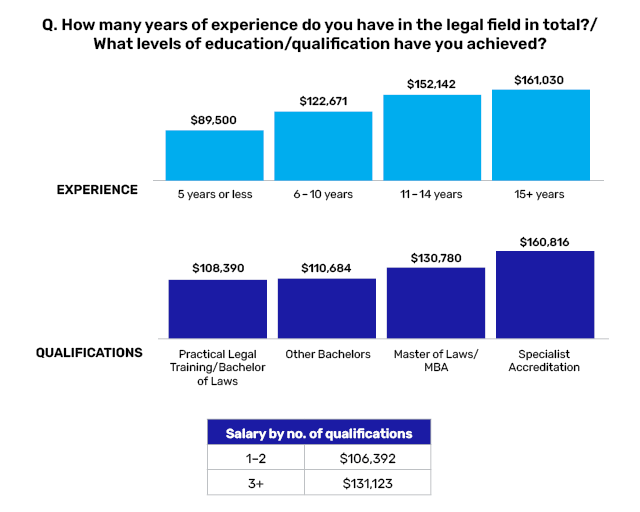
According to the College of Law Legal Salary Survey 2025, lawyers with postgraduate qualifications report average salaries above $130,000 per year, around $20,000 more than those with only an undergraduate qualification.
As demand for skilled arbitrators continues to rise, further study can help you strengthen both your expertise and your career trajectory.
HOW DO I BECOME AN ARBITRATION LAWYER?
Your pathway generally includes:
- Completing a Bachelor of Laws (LLB) or Juris Doctor (JD), selecting arbitration or dispute resolution electives where possible.
- Completing Practical Legal Training (PLT).
- Admission through your state’s legal profession admission board (for lawyers).
- Completing supervised practice, ideally within a dispute resolution or arbitration team.
- Continuing to build expertise through postgraduate study and embarking on a pathway to becoming a Member or even a Fellow, of the Chartered Institute of Arbitrators.
The College of Law’s Graduate Certificate in International Arbitration Practice develops advanced skills in arbitral procedure, pleadings, awards, enforcement and international dispute frameworks.
Subjects are taught by leading practitioners who understand the realities of international arbitration and complex dispute resolution.
ADVANCING YOUR CAREER WITH THE COLLEGE OF LAW
Arbitration lawyers are increasingly central to resolving complex commercial and international disputes.
The College’s postgraduate programs help you strengthen procedural expertise, advocacy and international dispute resolution capability so you can progress your career with confidence.
Build specialist skills that clients and tribunals rely on and position yourself in one of law’s fastest growing and most prestigious practice areas.
FREQUENTLY ASKED QUESTIONS
Yes. Arbitration is one of the fastest-growing areas of dispute resolution in Australia and internationally. With businesses increasingly choosing arbitration for cross-border and complex disputes, it offers strong career prospects, international mobility and long-term demand.
Many practitioners also combine arbitration with litigation or commercial advisory work to broaden their practice.
The Graduate Certificate in International Arbitration Practice includes two subjects:
- International Arbitration Practice
- International Commercial Arbitration: The Arbitral Award & Award Writing
Each subject is practical and internationally focused, helping you build applied skills in procedure, advocacy and award writing.
Absolutely. Many arbitration practitioners expand their expertise into Business Law and Transactions, Commercial Litigation or ASEAN+6 Legal Practice to support cross-border transactions and regional dispute resolution.
These areas naturally overlap, allowing you to deliver more complete dispute resolution and advisory solutions across domestic and international matters.
To thrive in arbitration, you’ll need:
- Strong written and oral communication skills
- Strategic decision-making and procedural judgment
- Interpersonal skills for working across cultures and legal systems
- Attention to detail when managing complex evidence and procedure
- Commercial awareness to shape effective dispute resolution strategies
The College of Law’s Graduate Certificate in International Arbitration Practice strengthen these through applied, practice-based learning led by experienced arbitration practitioners.
International arbitration lawyers use CPD to strengthen skills in dispute resolution, procedure, evidence and cross-border legal frameworks.
Because arbitration practice often spans multiple jurisdictions and legal systems, CPD is particularly valuable for building and maintaining capability across advocacy, negotiation, evidence handling and international dispute strategy.
The CPD Digital Subscription provides on-demand access to a broad library of 150+ CPD courses, allowing you to build knowledge across all mandatory areas and focus on topics most relevant your practice area at your own pace.