
HOW TO BECOME AN ESTATE PLANNING LAWYER
YOUR PATHWAY INTO ESTATE PLANNING
Estate planning focuses on helping individuals, families and business owners structure their affairs for the future. It involves advising on succession, asset protection, tax efficiency and long-term control of wealth.
While many clients assume their affairs are “simple”, experienced practitioners know estate planning often spans trusts, companies, blended families, overseas assets and intergenerational wealth.
At the College of Law, you can build advanced advisory skills in estate planning or wills and estates through postgraduate study, preparing you to manage complexity with confidence and precision.

At-a-glance: How to Become an Estate Planning Lawyer
This page covers:
- What does an estate planning lawyer do day-to-day?
- What personal strengths suit estate planning?
- Is estate planning a good area to specialise in?
- What kinds of clients do estate planning lawyers work with?
- How complex is estate planning compared to other areas?
- Pros and cons of a career in estate planning
- How postgraduate study can strengthen your career prospects
- How do I become an estate planning lawyer?
WHAT DOES AN ESTATE PLANNING LAWYER DO DAY-TO-DAY?
Estate planning lawyers advise clients on how best to structure, protect and transfer wealth during life and after death.
Typical work includes:
- Drafting and reviewing sophisticated Wills and testamentary trusts
- Advising on trust structures, companies and succession planning
- Asset protection and risk management strategies
- Business succession and intergenerational wealth planning
- Powers of attorney and enduring guardianship arrangements
- Anticipating and minimising the risk of estate disputes
Staying up to date with legal and procedural change is a core part of estate planning practice. Explore recent developments in NSW’s Costs Capping Protocol in probate matters and how effective estate planning plays a key role in reducing disputes and managing potential cost exposure before issues arise.
A DAY IN THE LIFE OF WILLS AND ESTATES LAWYER
Our article, A day in the life of a Wills & Estates lawyer: Coffee first, cat trusts later, explores how estate planning often involves deeply personal client relationships, where clarity and foresight are critical.
IS ESTATE PLANNING A GOOD AREA TO SPECIALISE IN?
Yes. Estate planning remains a highly regarded and consistently in-demand area of legal practice.
An ageing population, rising asset complexity and increased use of trusts and corporate structures continue to drive demand for specialist advice. Estate planning expertise is valued across private practice, boutique firms and multidisciplinary advisory environments.
It is also an area where strong technical skill and judgement are quickly recognised by clients.
WHAT KINDS OF CLIENTS DO ESTATE PLANNING LAWYERS WORK WITH?
Estate planning lawyers act for:
- High-net-worth individuals and families
- Business owners and entrepreneurs
- Clients with trusts, companies or SMSFs
- Blended families and cross-border estates
- Elderly clients planning for incapacity
HOW STRESSFUL IS ESTATE PLANNING COMPARED TO OTHER AREAS?
Estate planning is rarely straightforward. Even modest estates can involve multiple ownership structures, family expectations and competing interests.
DIY approaches, such as Will kits, frequently lead to disputes and litigation. As highlighted in real-world practice, ambiguity or technical errors can result in years of costly conflict. Estate planning lawyers play a preventative role, ensuring client intentions are legally effective and enforceable.

WHAT ARE THE PROS AND CONS OF A CAREER IN ESTATE PLANNING?
Estate planning offers intellectually rewarding work for lawyers who enjoy advisory practice and long-term client relationships.
| Pros | Cons |
|---|---|
| Strategic, advisory-focused practice | Requires high technical accuracy |
| Strong client trust and relationships | Navigating emotionally sensitive matters |
| Consistent demand across economic cycles | Working through complex family dynamics |
| Opportunities to prevent disputes | High responsibility for outcomes |
HOW POSTGRADUATE STUDY CAN INCREASE YOUR EARNING POTENTIAL
Postgraduate study can strengthen your confidence and capability in estate planning.
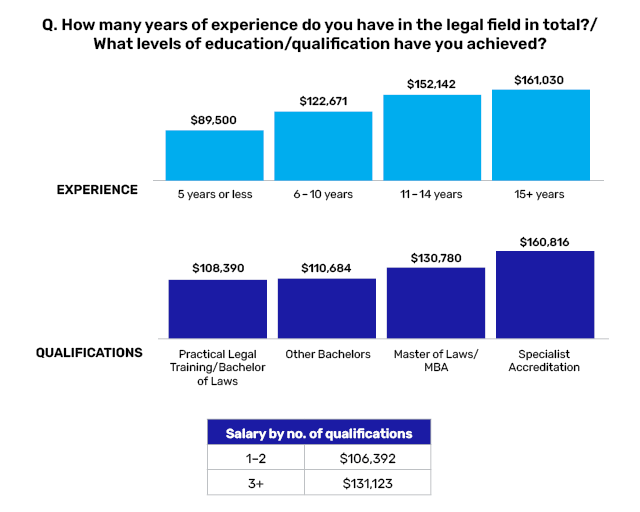
According to the College of Law Legal Salary Survey 2025, lawyers with postgraduate qualifications report average salaries above $130,000 per year, around $20,000 more than those with only an undergraduate qualification.
Sarah-Jane Rodgers, LLM Graduate majoring in Wills and Estates, reflects on the value of postgraduate study:
“The lecturers were all practising in the area and brought everything back to real cases. It was challenging, but confidence-building. I’m glad I did it.”

STEP MEMBERSHIP: YOUR PATH TO SPECIALIST RECOGNITION
The College of Law is an Accredited Education Partner of the Society of Trust and Estate Practitioners (STEP). Successfully completing the Master of Laws (Applied Law) majoring in Estate Planning allows you to apply for Full STEP membership, a globally recognised mark of expertise in inheritance and succession planning.
HOW DO I BECOME AN ESTATE PLANNING LAWYER?
Your pathway generally includes:
- Completing a Bachelor of Laws (LLB) or Juris Doctor (JD).
- Completing Practical Legal Training (PLT).
- Admission through your state’s legal profession admission board.
- Gaining experience in succession, trusts or advisory roles.
- Building specialist expertise through postgraduate study.
The College of Law’s Master of Laws (Applied Law) majoring in Estate Planning develops advanced skills in succession planning, trusts, asset protection and risk management.
Subjects are taught by experienced practitioners who understand the realities of advising clients on complex estates and long-term wealth planning.
You may also choose to complete the Master of Laws (Applied Law) majoring in Wills and Estates, particularly if your practice includes estate administration, probate and estate litigation alongside strategic estate planning advice.
Subjects are taught by experienced practitioners who understand the realities of advising clients on complex estates, long-term wealth planning and succession strategies.
ADVANCING YOUR CAREER WITH THE COLLEGE OF LAW
Estate planning lawyers play a vital role in protecting wealth, preserving family relationships and preventing disputes. The College’s postgraduate programs help you develop the expertise clients rely on when planning for the future.
Build confidence in one of law’s most trusted and enduring advisory practice areas.
FREQUENTLY ASKED QUESTIONS
Yes. Estate planning offers long-term career stability and strong client demand. As asset structures and family arrangements become more complex, specialist advice is increasingly essential.
The Master of Laws (Applied Law) majoring in Estate Planning includes subjects focused on:
- Foundations of Estate Planning
- Superannuation
- Business Succession Planning
- Inter Vivos and Testamentary Trusts
- Accounting and Tax for Estates and Trusts
- Applied Taxation Strategies
You can also complete the Master of Laws (Applied Law) majoring in Wills and Estates, or combine subjects across both majors, to gain a comprehensive understanding of estate planning and estate administration.
Each subject is practical and advisory-focused, helping you manage complexity with confidence.
Absolutely. Estate planning naturally overlaps with Property Law and Wills and Estates, allowing you to deliver holistic advice across clients’ personal and commercial affairs.
- Technical precision and drafting accuracy
- Strategic foresight
- Strong client communication skills
- Empathy and professional judgement
The College of Law’s postgraduate programs strengthen these through applied, practice-based learning.
Wills and Estates deals with legal processes after death, such as probate and estate administration. Estate Planning focuses on structuring assets and minimising tax before death.
Not necessarily, but many lawyers do. Wills and Estates focuses on managing and distributing assets, while Estate Planning centres on strategic advice and financial structuring.
Together they provide a complete understanding of succession law, enabling you to support clients across both planning and administration stages.
Postgraduate study helps you move from routine drafting into complex advisory work.
The College of Law’s Master of Laws (Applied Law) majoring in Estate Planning equips you with advanced skills in succession planning, trusts and asset protection, positioning you for long-term career growth.
STEP membership can be achieved through an accredited education pathway that combines postgraduate study with relevant professional experience.
The College of Law is a recognised STEP education provider. By successfully completing the Master of Laws (Applied Law) majoring in Estate Planning, you can apply for Full STEP membership and TEP status.
Applicants must also have a minimum of two years’ current experience in an area related to STEP. Explore your education pathway to STEP membership.
This makes postgraduate study one of the most accessible and structured routes to STEP membership for Australian estate planning lawyers.
STEP membership is widely recognised as a mark of specialist credibility in estate planning. It signals advanced capability to clients, peers and employers, particularly in complex estates, superannuation, trusts and succession planning matters.
Estate planning lawyers use CPD to strengthen practical skills in estate administration, probate and powers of attorney, while staying compliant with evolving legal and professional obligations.
If you want a strong foundation, the Essential Guide to Wills and Estates Practice CPD bundle provides current, practical training across the core areas of estate planning. Build confidence in advising clients with complex personal, financial and succession needs.
You can also tailor your CPD with focused step-by-step guides, including:
- Acting in Mortgage Transactions: Step-by-Step Guide
- Administration of Estates: Step-by-Step Guide
- Powers of Attorney: Step-by-Step Guide
- Probate Applications: Step-by-Step Guide
If you’re looking for more flexibility, the CPD Digital Subscription provides on-demand access to a library of 150+ CPD courses, allowing you to maintain compliance while expanding your knowledge across all mandatory CPD areas relevant to estate planning practice.