
HOW TO BECOME A COMMERCIAL LITIGATOR
YOUR PATHWAY INTO COMMERCIAL LITIGATION
Commercial litigation sits at the heart of complex business disputes. It focuses on resolving conflicts that arise from commercial relationships, contracts, insolvency, shareholder disputes and regulatory matters.
When negotiations fail and disputes escalate, commercial litigators play a critical role in protecting client interests, shaping litigation strategy and navigating matters through courts, tribunals and alternative dispute resolution.
At the College of Law, you can build the advanced advocacy, strategy and procedural skills needed to thrive in this demanding field through postgraduate study in Commercial Litigation..

At-a-glance: How to Become a Commercial Litigator
This page covers:
- What does a commercial litigator do day-to-day?
- What personal strengths suit commercial litigation?
- Is commercial litigation a good area to specialise in?
- What kinds of clients do commercial litigators work with?
- How stressful is commercial litigation compared to other areas?
- Pros and cons of a career in commercial litigation
- How postgraduate study can increase your earning potential
- How do I become a commercial litigator?
WHAT DOES A COMMERCIAL LITIGATOR DO DAY-TO-DAY?
Commercial litigators resolve disputes that arise when business relationships break down. Matters often involve high financial stakes, complex evidence and sophisticated legal strategy.
Typical work includes:
- Advising clients on dispute risk and litigation strategy
- Drafting pleadings, affidavits and submissions
- Managing discovery and large-scale electronic document reviews
- Conducting interlocutory applications and procedural hearings
- Leading negotiations and mediations to resolve disputes
- Advocating in courts, tribunals and arbitration forums
Commercial litigation is unpredictable by nature. Matters can run for months or years and may involve multiple parties, jurisdictions and technical legal issues. So, each day brings a different challenge.

IS COMMERCIAL LITIGATION A GOOD AREA TO SPECIALISE IN?
Yes. Commercial litigation remains one of the most intellectually demanding and highly regarded areas of legal practice.
It offers strong career prospects in large and mid-tier firms, boutique litigation practices and specialist dispute resolution teams. Inter-departmental referrals are common, particularly where corporate, insolvency or regulatory matters escalate into disputes.
Commercial litigation is also a field where technical excellence is recognised.
WHAT KINDS OF CLIENTS DO COMMERCIAL LITIGATORS WORK WITH?
Commercial litigators act for a wide range of clients, including:
- Corporations and multinational businesses
- Financial institutions and insolvency practitioners
- Directors, shareholders and executives
- Insurers and professional service firms
- Government agencies and regulators
Matters may involve contractual disputes, shareholder conflicts, insolvency litigation, class actions, regulatory investigations or international disputes.
Commercial litigators often work on complex matters with global implications, managing evidence, privilege and large-scale document streams across multi-national teams.

I was able to sharpen my skills working on course assignments, which were mostly very practical. I also gained insightful feedback in relation to a number of points that I could improve upon to become a better lawyer.
Tiago Silva, LLM Graduate- Commercial Litigation
Earlier in my career, flexibility was important to me. I also needed a course that was delivered online. The College of Law’s Masters of Commercial Litigation met both requirements.
Krish Nath, LLM Graduate- Commercial Litigation
HOW STRESSFUL IS COMMERCIAL LITIGATION COMPARED TO OTHER AREAS?
Commercial litigation is one of the most demanding practice areas. Matters often involve tight deadlines, high financial exposure and intense adversarial pressure.
However, many litigators find the work deeply rewarding. Winning a complex matter, setting precedent or shaping strategy in high-profile disputes provides a strong sense of professional achievement.
As Krishneel Nath, LLM Graduate, notes: the challenge lies in being driven, proactive and able to foresee possible outcomes to help clients manage risk and navigate disputes effectively.
WHAT ARE THE PROS AND CONS OF A CAREER IN COMMERCIAL LITIGATION?
With its mix of advocacy, strategy and high-stakes problem-solving, commercial litigation offers a challenging and rewarding career for lawyers who enjoy complex disputes.
| Pros | Cons |
|---|---|
| High intellectual challenge and complexity | Long matters and unpredictable workloads |
| Strong demand in large and specialist firms | High pressure and adversarial |
| Opportunities to work on high-profile matters | Extensive document management and preparation |
| Clear pathways to senior and specialist roles | Tight procedural deadlines |
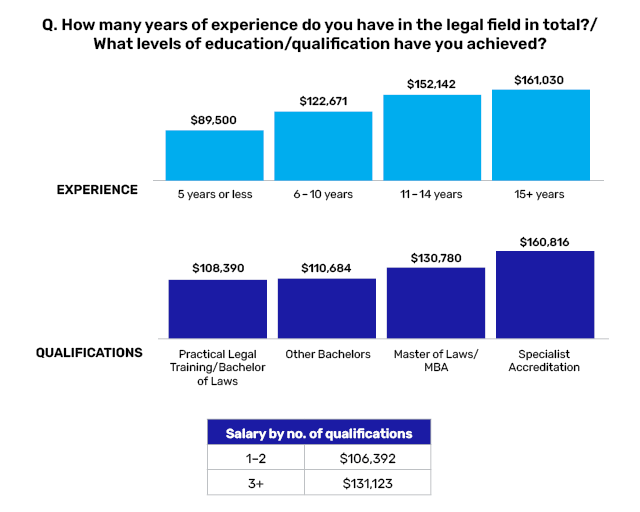
HOW POSTGRADUATE STUDY CAN INCREASE YOUR EARNING POTENTIAL
Postgraduate study can significantly strengthen your litigation capability and career trajectory.
According to the College of Law Legal Salary Survey 2025, lawyers with postgraduate qualifications report average salaries above $130,000 per year, around $20,000 more than those with only an undergraduate qualification.
As demand for highly skilled litigators grows, specialist training helps you move into complex disputes, strategy roles and senior positions.
Dominique Mayo, LLM Graduate, describes the impact of postgraduate study on her practice:
“The benefits well and truly outweigh the cons. I would encourage litigators seeking to accelerate their career trajectory to consider the Commercial Litigation LLM program.”
HOW DO I BECOME A COMMERCIAL LITIGATOR?
Your pathway generally includes:
- Completing a Bachelor of Laws (LLB) or Juris Doctor (JD), selecting commercial litigation electives where possible.
- Completing Practical Legal Training (PLT). Civil Litigation Practice and Commercial and Corporate Practice are mandatory subjects.
- Admission through your state’s legal profession admission board (for lawyers).
- Completing supervised practice (often 18–24 months), ideally within a commercial litigation firm.
- Continuing to build expertise through postgraduate study and relevant professional memberships.
The College of Law’s Master of Laws (Applied Law) Majoring in Commercial Litigation develops advanced skills in litigation strategy, managing complex disputes, advocacy, evidence and procedural practice.
Subjects are taught by experienced practitioners who understand the realities of high-stakes commercial litigation and complex dispute resolution.
ADVANCING YOUR CAREER WITH THE COLLEGE OF LAW
Commercial litigators play a critical role in resolving complex disputes and protecting commercial interests across Australia. The College’s postgraduate programs help you strengthen advocacy, strategy and procedural expertise so you can progress your career with confidence.
Build specialist capability that clients and firms rely on and position yourself in one of law’s most challenging and prestigious practice areas.
FREQUENTLY ASKED QUESTIONS
Yes. Commercial litigation remains one of the most respected and in-demand areas of practice in Australia.
With complex disputes arising across all industries, it offers strong career prospects, intellectual challenge and opportunities to work on high-profile matters.
Many litigators also combine litigation with insolvency, corporate or regulatory work to broaden their expertise.
Explore postgraduate study in Commercial Litigation.
The Master of Laws (Applied Law) majoring in Commercial Litigation includes subjects such as:
- Foundations of Commercial Litigation
- Pre-trial Procedures
- Dispute Resolution Processes
- Managing Complex Litigation
- Building and Construction Disputes
- Insurance Disputes
- Intellectual Property Litigation
- Insolvency Litigation
- Corporations Litigation
- Competition Litigation
Each subject is practical and strategy focused, helping you build advanced capability in advocacy, evidence management and dispute resolution.
Absolutely. Many commercial litigators expand their expertise into Business Law and Transactions or Dispute Resolution, helping clients manage disputes, contracts and governance across complex commercial matters.
These areas naturally overlap, allowing you to develop a highly specialised practice and deliver more strategic dispute resolution solutions.
To thrive in commercial litigation, you’ll need:
- Strategic thinking to shape litigation outcomes
- Advocacy skills for persuasive written and oral argument
- Negotiation skills to resolve disputes effectively
- Attention to detail when managing evidence and procedure
- Resilience to perform under pressure in adversarial environments
The College of Law’s programs strengthen these through applied, practice-based learning led by experienced practitioners.
Postgraduate study helps you move from routine disputes into complex, high-value litigation and strategic advisory roles.
The College of Law’s Master of Laws (Applied Law) majoring in Commercial Litigation equips you with advanced skills in managing complex disputes, advocacy and litigation strategy, positioning you for senior roles and long-term career progression.
Commercial litigators use CPD to strengthen practical skills across procedure, advocacy, evidence and enforcement.
If you want a strong foundation, the Essential Guide to Advocacy CPD bundle builds capability in case analysis, cross-examination, drafting and oral submissions.
You can also tailor your CPD with focused single courses, including:
- Case management and pre-trial procedures NSW
- Case Preparation and Pleadings NSW: Practice guide
- Contract claims in the District Court NSW: Step by step
- Drafting affidavit evidence: Skills series
- Enforcing judgement debts: Step-by-step guide
- Evidence-in-chief: Practice guide
- Preparing a brief to counsel: Skills series
- Rules of Evidence: Practice guide
- Termination of contracts: Practice guide
- Unpacking commercial contracts: Skills series
These options allow you to build procedural confidence, refine advocacy skills and strengthen your approach to complex disputes.
If you prefer flexibility, the CPD Digital Subscription gives you on-demand access to a large library of 150+ CPD courses, allowing you to build litigation capability across all mandatory areas at your own pace.