
HOW TO PRACTISE LAW IN ASEAN+6 JURISDICTIONS
YOUR PATHWAY INTO ASEAN+6 LEGAL PRACTICE
ASEAN+6 legal practice focuses on advising clients across the Asia-Pacific region, including Southeast Asia, China, Japan, Korea, India, Australia and New Zealand. It spans cross-border transactions, international arbitration, trade, investment, capital markets, governance and regulatory risk.
As business, trade, investment and capital increasingly flow across borders, lawyers with regional expertise are in growing demand. International lawyers working in ASEAN+6 play a key role in helping organisations navigate legal systems, cultural differences and commercial realities across multiple jurisdictions and different legal traditions.
At the College of Law, you can develop advanced cross-border capability through postgraduate study in ASEAN+6 Legal Practice.

At-a-glance: How to Practise Law in ASEAN+6 Jurisdictions
This page covers:
- What does a lawyer in ASEAN+6 legal practice do day-to-day?
- What personal strengths suit ASEAN+6 legal practice?
- Is ASEAN+6 legal practice a good area to specialise in?
- What kinds of clients do cross-border lawyers work with?
- How demanding is ASEAN+6 legal practice compared to other areas?
- Pros and cons of a career in ASEAN+6 legal practice
- How postgraduate study can increase your earning potential
- How do I become a lawyer in ASEAN+6 legal practice?
WHAT DOES A LAWYER IN ASEAN+6 LEGAL PRACTICE DO DAY-TO-DAY?
International lawyers advise on legal matters that cross national borders, legal systems and cultures. Their work often involves coordinating advice across multiple jurisdictions and different legal traditions, while balancing legal risk with commercial objectives.
Typical work includes:
- Advising on cross-border transactions and investments
- Supporting international arbitration and dispute resolution
- Managing regulatory and compliance risk across jurisdictions
- Drafting and negotiating international contracts
- Advising in-house teams on governance and regional operations
- Working with foreign counsel and regional stakeholders
FAR MORE THAN LEGAL KNOWLEDGE ALONE
In Embracing the Asian Century with APAC Legal Counsel, Haylen Pong explains how understanding culture, politics and commercial context is critical to effective legal advice in the region.
IS ASEAN+6 LEGAL PRACTICE A GOOD AREA TO SPECIALISE IN?
Yes. ASEAN+6 legal practice offers strong long-term career opportunities as trade, investment and regulatory complexity across the region continues to grow.
Lawyers with Asia-Pacific expertise are sought after in:
- In-house legal teams
- International and mid-tier firms
- Government and regulatory bodies
- Arbitration and dispute resolution practices
Specialising in ASEAN+6 legal practice positions you to work on high-value, international matters and to future-proof your legal career.
WHAT KINDS OF CLIENTS DO CROSS-BORDER LAWYERS WORK WITH?
Cross-border lawyers commonly act for:
- Multinational corporations
- In-house legal and compliance teams
- Government and public sector bodies
- Investors and financial institutions
- International organisations
As a lawyer working in the ASEAN+6 region, you must understand not only both international and domestic law, but how culture, trade, politics and economics intersect across borders.
HOW DEMANDING IS ASEAN+6 LEGAL PRACTICE COMPARED TO OTHER AREAS?
Cross-border legal practice can be demanding. Matters often involve multiple time zones, jurisdictions and regulatory frameworks.
However, many lawyers find the work highly rewarding. Exposure to international matters, regional strategy and diverse stakeholders provides professional variety and long-term career growth.
WHAT ARE THE PROS AND CONS OF A CAREER IN ASEAN+6 LEGAL PRACTICE?
| Pros | Cons |
|---|---|
| International career opportunities | Complex regulatory environments |
| High demand for regional expertise | Managing time zones and jurisdictions |
| Exposure to cross-border transactions | Ongoing need to track regional change |
| Strong progression into senior roles | Steep learning curve early on |
Studying in the ASEAN+6 program makes you immediately more cognizant of differences in culture, customs, and language. Keeping this in mind, I found myself tackling my legal counterparts overseas differently. Being willing to apply new learning expanded my daily legal experience.
Haylen Pong, Asia Pacific Legal Counsel, Diligent Corporation, LLM Graduate

All of the lecturers are just so wonderful and so knowledgeable. They all understand that you're working as well as trying to study and are just so accommodating.
Jessica Popple, LLM Graduate
HOW POSTGRADUATE STUDY CAN INCREASE YOUR EARNING POTENTIAL
Postgraduate study can significantly strengthen your litigation capability and career trajectory.
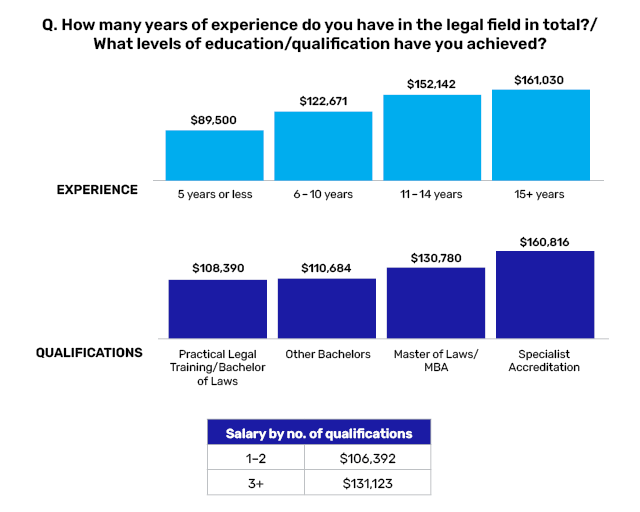
According to the College of Law Legal Salary Survey 2025, lawyers with postgraduate qualifications report average salaries above $130,000 per year, around $20,000 more than those with only an undergraduate qualification.
ASEAN+6 expertise positions you for senior in-house roles, international firm opportunities and leadership positions in cross-border practice.
HOW CAN I PRACTISE IN ASEAN+6 JURISDICTIONS?
Your pathway generally includes:
- Completing a Bachelor of Laws (LLB) or Juris Doctor (JD).
- Completing Practical Legal Training (PLT).
- Admission through your state’s legal profession admission board (for lawyers).
- Gaining experience in commercial, international or regulatory practice.
- Building practical expertise through postgraduate study.
The College of Law’s Master of Laws (Applied Law) Majoring in ASEAN+6 Legal Practice develops advanced capability in cross-border law, international arbitration, trade, investment and governance, taught by experienced practitioners with deep regional insight.
Note: completion of this award does not qualify you for admission to practise law in ASEAN+6 jurisdictions. Admission requirements are determined by the relevant legal regulators in each jurisdiction.
ADVANCING YOUR CAREER WITH THE COLLEGE OF LAW
Cross-border lawyers operate at the forefront of ASEAN+6 legal practice. The College’s postgraduate programs help you build the regional expertise, strategic insight and confidence needed to advise across borders.
Strengthen your global perspective and position yourself for a career that spans jurisdictions, industries and markets.
FREQUENTLY ASKED QUESTIONS
Yes. ASEAN+6 legal practice is a strong and future-focused area of specialisation as trade, investment and regulatory activity across the Asia-Pacific region continues to expand.
Lawyers with ASEAN+6 expertise are increasingly valued for their ability to advise across multiple jurisdictions and different legal traditions, manage cross-border risk and support international transactions, disputes and governance matters. This specialisation is particularly relevant for lawyers working in in-house, international firm, arbitration and regulatory environments.
The Master of Laws (Applied Law) majoring in ASEAN+6 Legal Practice includes subjects designed to build advanced capability in cross-border law, regional practice and international dispute resolution, such as:
- Negotiating and Drafting Cross-border Contracts
- Cross-border Mergers and Acquisitions
- Banking and Finance Practice
- Intellectual Property Practice
- International Arbitration Practice
- Trade and Investment in Asia
- ASEAN+6 Capital Markets Practice
- International Commercial Arbitration
If you are seeking a shorter postgraduate qualification, you can also complete the Graduate Certificate in International Arbitration Practice, which is made up of two ASEAN+6 subjects and provides a focused pathway into international arbitration:
- ILP7: International Arbitration Practice. This subject is offered in all four intakes, allowing you to start at any time.
- ILP14: International Commercial Arbitration: The Arbitral Award & Award Writing. This subject is offered twice a year in Intake 2 and Intake 4.
Both study options are practical and regionally focused, helping you develop the legal, strategic and cultural insight required to work confidently across ASEAN+6 jurisdictions and international arbitration settings.
Absolutely. ASEAN+6 legal practice naturally complements a range of legal and advisory roles, including commercial law, international arbitration and government practice.
Many lawyers apply ASEAN+6 expertise alongside transactional, dispute resolution or advisory work to support clients operating across borders. These overlaps allow you to deliver more strategic, commercially informed advice in complex international matters.
To succeed in ASEAN+6 legal practice, you will need:
- Strong commercial awareness across international markets
- Cultural intelligence and adaptability
- Clear communication across jurisdictions and stakeholders
- Strategic thinking to manage cross-border legal risk
- Confidence working with foreign counsel and regulatory bodies
The College of Law’s postgraduate programs strengthen these skills through applied, practitioner-led learning grounded in real cross-border practice.
Postgraduate study helps you move from domestic practice into more complex cross-border and regional roles.
The College of Law’s Master of Laws (Applied Law) majoring in ASEAN+6 Legal Practice equips you with advanced knowledge of international legal frameworks, regional regulation and cross-border strategy. This positions you for senior in-house roles, international firm opportunities and specialist advisory work across the Asia-Pacific region.
Lawyers working across ASEAN+6 jurisdictions use CPD to stay current with legal developments, regulatory change and evolving international practice standards.
The CPD Digital Subscription provides on-demand access to a broad library of 150+ CPD courses, allowing you to maintain mandatory CPD requirements while selecting topics relevant to cross-border practice, governance, risk management and international legal trends.
This flexible option supports lawyers working across multiple jurisdictions and practice contexts.