
YOUR GUIDE TO A CAREER IN FAMILY LAW
THINKING ABOUT A CAREER IN FAMILY LAW?
Family law is a diverse and highly practical area of the law, dealing with legal issues that have a direct impact on people’s lives. Whether it’s initiating applications for parenting orders, property settlements, or family violence matters, family lawyers play a crucial role in helping clients navigate significant life changes.
If you’re considering a career in this area, understanding the skills, career pathways, and legal frameworks that shape family law practice in Australia is essential.
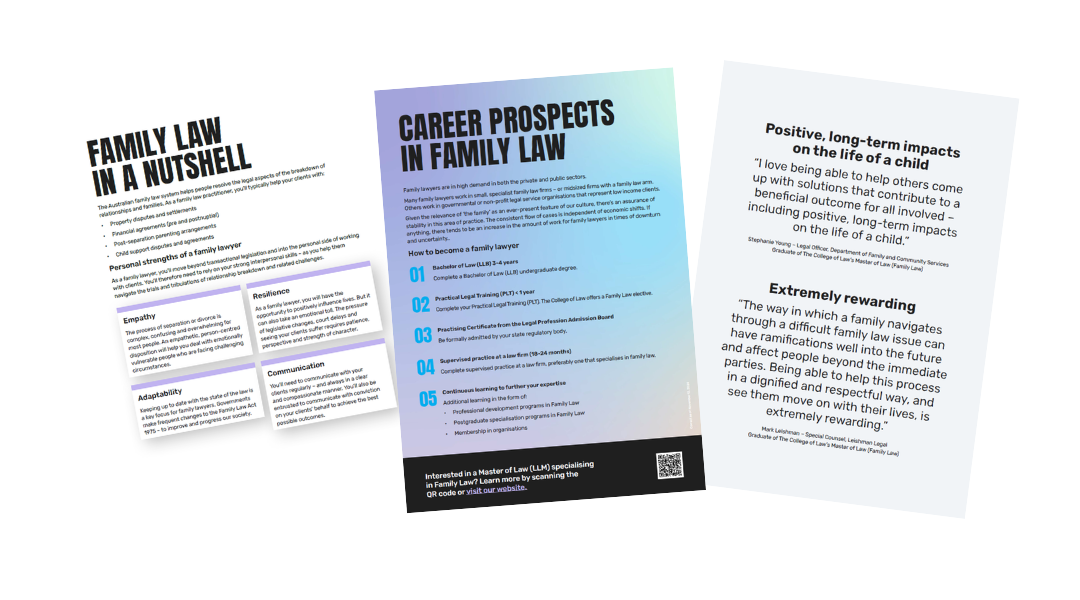
Download your free guide to learn:
- The core expertise required to practise family law
- The career pathway to become a family lawyer
- Personal strengths of a family lawyer
- The skills required and courses to help you attain them
- The role of mediation and alternative dispute resolution (ADR)
Complete the form to access your guide now
FREQUENTLY ASKED QUESTIONS
The guide provides an overview of what it's like to work in family law, the skills and strengths commonly associated with the profession, potential career pathways, and study options that can help you develop expertise in the field. Fill in the form above to download the guide.
This guide is designed for law students, recent graduates, practising lawyers looking to develop their family law expertise, professionals considering a career change, and anyone exploring opportunities in family law. It can help you understand whether this area of practice aligns with your interests and career goals.
Family law can offer meaningful, people-focused work and the opportunity to help clients navigate important life decisions. Many lawyers are drawn to the area because it combines legal problem-solving with strong client interaction.
The study pathway will depend on your current qualifications and career stage. Whether you're a law student, graduate or practising lawyer, there are practical training, CPD and postgraduate study options available to help you develop your family law expertise.
There are several steps involved in becoming a family lawyer, from completing legal qualifications through to gaining practical experience. For a detailed breakdown of the pathway, read our article on ‘How to Become a Family Lawyer'.
Yes. Family lawyers often develop expertise in areas such as parenting matters, property settlements, mediation, dispute resolution and other complex family law issues.